![Selling a House with a Waterlogged Crawl Space in [market_city]](https://image-cdn.carrot.com/eyJidWNrZXQiOiJwcm9kdWN0aW9uLmNhcnJvdC11cGxvYWRzLm9uY2Fycm90LmNvbSIsImtleSI6InVwbG9hZHMvc2l0ZXMvMjQ1NTQvMjAyNi8wOS9TZWxsaW5nLWEtSG91c2Utd2l0aC1hLVdhdGVybG9nZ2VkLUNyYXdsLVNwYWNlLnBuZyIsImVkaXRzIjp7InJlc2l6ZSI6eyJ3aWR0aCI6MTE1Mn0sInRvRm9ybWF0Ijoid2VicCJ9fQ==)

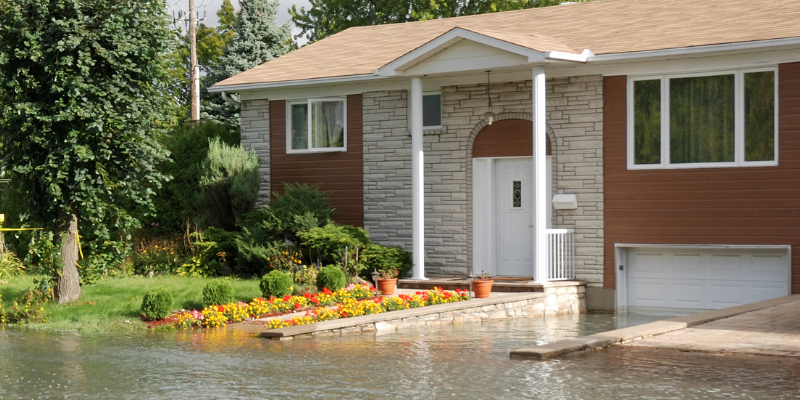
Four inches of standing water under a kitchen floor, found by a buyer’s inspector on a Tuesday. One flashlight photo has killed more Texas contracts than any roof or HVAC report I’ve seen. Most houses in this state sit on slabs. Pier-and-beam homes with vented crawl spaces are all over the older neighborhoods, though. Think the Heights in Houston, Oak Cliff in Dallas, the pre-war blocks of Galveston, plenty of 1940s cottages down here in the Valley. If yours holds water, you’ve still got real options. They just aren’t the ones an agent pitches at the first listing meeting.
Can You Sell a Texas House with Water in the Crawl Space?
Hide it, and you can be defending a lawsuit two years after you’ve spent the money. Texas gives buyers real teeth here. A wet crawl space on a disclosure form is a far smaller problem than one that turns up in a deposition.
Yes, you can sell. People sell houses with water under the floor every week in this state, and plenty of them close quietly.
What changes is the buyer pool. FHA appraisers work from HUD Handbook 4000.1, which tells them to look at every part of the crawl space and report pooling water, excess moisture, dampness, or anything that hints at trouble underneath. Conventional lenders get twitchy too, especially if the inspection mentions mold or sagging joists. So the pool narrows toward cash buyers, renovators, and investors who price a wet crawl space instead of fearing it.
Timing matters more than sellers expect in a softer market. Texas homes sold for a median of $333,611 in August 2026, down 1.3% from a year earlier, and the typical listing took 68 days, according to Redfin. I’ve seen it firsthand. A house with a known water issue sits longer than that average, not shorter, because every showing invites the same question.
My blunt read: passing a wet crawl space off as dry is the worst money move you can make. Disclosure costs you some leverage. Staying quiet can cost you the sale price back plus attorney’s fees.
If you’re looking for a simple way to sell, House Buyers RGV can provide a cash offer for your house as-is, with no repairs or listing required. Reach out to see what we can offer.
What Causes Water to Build Up in a Texas Crawl Space?
A gutter downspout dumped rainwater against the foundation’s northeast corner for eleven years. A contractor added twelve feet of extension pipe and regraded four inches of soil away from the house. The crawl space floor stayed dry through a full spring. That kind of cheap fix has saved more foundations than any expensive repair I’ve watched.
Drainage is usually the whole story, and it’s usually fixable. Water runs downhill. If the dirt beside your house slopes toward the foundation instead of away, gravity handles the rest.
Clay soil doesn’t do you any favors. Blackland Prairie clay and the heavy clays across South Texas swell when they get wet, then shrink hard in a drought. That movement cracks skirting and opens gaps at the perimeter, which creates a path straight into the crawl space. Saturated soil pushes, too. Hydrostatic pressure drives water through hairline cracks that would never leak on a dry day.
Plumbing does its share. A weeping supply line, a failed drain connection, or an air conditioning condensate line draining under the house keeps the crawl space ground wet with no rain at all.
Then there’s humidity, the Texas special. Gulf air stays muggy for months at a stretch, and when that moist air hits cool ductwork or a cool subfloor, you get condensation. No leak, no storm, still wet wood. A missing or shredded vapor barrier lets ground moisture rise all summer, and the joists soak it up. Mold follows moisture, not puddles. That’s why some crawl spaces smell musty with no visible water anywhere.
If you’re dealing with a wet crawl space and want to avoid costly repairs, contact us for a straightforward cash offer on your Texas house, as-is.
How Do You Check Your Crawl Space for Water Issues Before Listing in Texas?
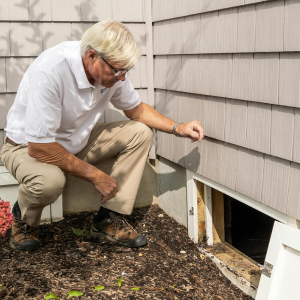
Shining a light through a foundation vent from the yard tells you almost nothing. It’s also how sellers end up blindsided at inspection.
Get under there, or pay someone who will. A licensed inspector charges a few hundred dollars for a crawl space-focused look, and that report is the most useful piece of paper you can own before you put it on the market.
Worth looking for: standing water or damp low spots, white mineral crust on the piers, rust lines on metal supports, and joists darker than the wood around them. Press a screwdriver into a beam near a pier. If it sinks, that’s rot, not just moisture.
Early last year, three adult children in Harlingen called me. Their mother had lived in the same pier-and-beam house since the Carter administration. Thirty years of belongings filled every closet, the garage held a chest freezer that hadn’t run since 2019, and the crawl space had two damp corners nobody had looked at in decades. All three siblings wanted a clean exit rather than a renovation project, and that’s what we structured.
Measure the humidity while you’re down there. A cheap hygrometer left in the crawl space overnight tells you whether you’ve got a water problem or a moisture problem. The EPA says to keep indoor humidity under 60%, and readings that stay above that line mean mold has what it needs, even if the crawl space floor looks bone dry.
Photograph what you find, and keep the dates. Buyers trust a seller who documents more than one who reassures.
What Disclosure Laws Apply to Crawl Space Water in Texas?
Two separate disclosure rules land on a Texas seller here, and they come from different statutes. TREC’s contract forms changed on January 3, 2025, and paragraph 6E(11) now puts the seller on the hook for mold paperwork. Texas Occupations Code Section 1958.154 requires you to hand the buyer a copy of every mold remediation certificate issued for the property in the five years before the sale. Crawl space water and mold travel together, so that liability can land on you.
Texas Property Code Section 5.008 is the statute behind the disclosure form itself. A seller of residential property with no more than one dwelling unit has to give the buyer a written notice describing known conditions.
The standard is knowledge, not perfection. You complete the notice to the best of your belief and knowledge as of the day you sign it. Marking a box “Unknown” when you truly don’t know satisfies the law.
Ignorance has limits on a disclosure form. Courts here haven’t been kind to sellers who claim they never noticed something any reasonable homeowner living in the house would have noticed.
Hurricane Harvey pushed lawmakers to tighten the flooding questions, and the rewritten notice took effect September 1, 2019. It asks whether the house sits in a FEMA 100-year or 500-year floodplain, in a floodway, or in a reservoir flood pool. It also asks about prior flooding, past flood repairs, and flood insurance. Water under your floor from a neighborhood drainage problem is a different disclosure than water from a storm, so read each question for what it asks.
Delivery timing trips people up. The disclosure notice belongs in the buyer’s hands on or before the contract’s effective date. If it shows up late, Section 5.008 gives the buyer seven days after receiving it to terminate for any reason. A fiduciary handling an estate is exempt from the notice, but an executor who knows about the water should disclose it anyway.
How to Fix or Minimize Crawl Space Water Problems Before You Sell
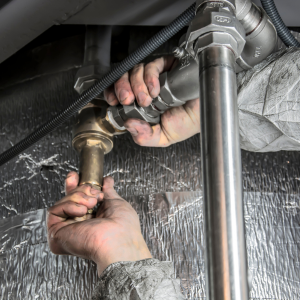
For years I told sellers to fix the crawl space first and list second. That advice cost some of them money they never got back.
Cheap fixes first, always. Extend the downspouts away from the house. Regrade soil so it falls away from the perimeter, clear a drainage path to the street, and you’ll solve a surprising share of crawl space water with no contractor’s crew involved. A weekend of yard work sometimes ends it.
Then comes the middle tier. A perimeter drain channel feeding a sump pump handles water that’s already getting in. Angi puts a sump pump at $1,100 installed on average in 2026, with most jobs landing between $800 and $3,000. Pair it with fixing whatever plumbing or condensate line is contributing. A pump that runs constantly is a symptom, not a cure.
Full encapsulation is where budgets break. Angi’s 2026 pricing puts crawl space sealing at about $5,500 nationally, with a range of $5,000 to $15,000. The top of that range is for spaces that need drainage work and mold remediation before a vapor barrier goes down. In our humid stretch of the state, encapsulation without a dehumidifier tends to fall short.
My opinion, plainly: spend on the cause, not the cosmetics. Sellers who dry the space, replace the vapor barrier, and hand buyers a paid invoice from a real company get better traction than sellers who spray bleach and hope. If the scope runs past what you’d net from the repair, stop. Arithmetic is telling you to sell as-is, which attracts cash home buyers in Killeen and surrounding Texas cities.
Should You Sell a Texas House with Water in the Crawl Space As-is?
Sitting at a kitchen table, here’s what I tell a seller. You don’t have to fix a problem you didn’t create just so a stranger can get a mortgage on your house.
As-is doesn’t mean hiding anything. You disclose what you know, price accordingly, and let the buyer inspect freely. What you’re skipping is the repair work, the contractor scheduling, and that second round of talks after the buyer’s inspector writes his report.
It usually wins in a few specific spots. You’ve inherited the house and live in another city. Maybe you don’t have cash sitting around for a five-figure repair, or your timeline runs in weeks rather than seasons.
Cash buyers change the math by removing the lender. Texas cash buyers can purchase without a traditional mortgage, so no appraiser flags the crawl space floor, no underwriter demands a mold clearance letter, and no financing contingency collapses on day thirty.
The honest tradeoff is price. A cash as-is offer comes in below what a fully repaired house would fetch on the open market. What that difference buys you is certainty, speed, and an end to your carrying costs.
Run both numbers first. Take the retail price, subtract repairs, commissions, months of mortgage, taxes, and insurance, then subtract whatever the buyer knocks off after inspection. Compare that to a cash figure with no deductions. Occasionally the listing wins. It’s often close enough that speed decides.
How to Price Your Texas Home Fairly When Water Problems Exist

“How much is this thing going to cost me off the top?” That question needs an answer built on a contractor’s written estimate rather than a guess. Once the repair scope is on paper, you can defend a price. Without it, every buyer invents a number, and their number is always worse than the real one.
Local comps still anchor the value. Zillow pegged the average McAllen home value at $228,710 as of July 31, 2026, up just 0.5% over the year, with homes going pending in about 55 days. Nearly two months of carrying costs is real money when you’re already paying to keep a house you don’t live in.
A fair approach: price from comps that sold dry, subtract the documented repair cost, then take off a little more for the buyer’s nerves. That last piece stings. It’s also why sellers who discount only by the estimate watch their listing go stale. If you’re considering an alternative, a company that buys houses in Brownsville and other Texas cities may provide a cash offer based on the property’s condition.
Don’t chase the market down in small steps. Two big price drops signal weakness, buyers wait instead of making offers, and you reset your days on market twice. One correct price, backed by estimates and photos, pulls the buyers who can actually close.
Appraisals deserve a mention. If your buyer is financed and the appraiser notes crawl space moisture damage to the subfloor or joists, the appraised value can land under your contract price. You’ll start that talk from a weaker spot. Pricing it right up front keeps you out of that corner.
Frequently Asked Questions
Will Homeowners Insurance Pay for Water in a Crawl Space?
It depends on where the water came from. A sudden burst supply line is usually covered under a standard policy, while gradual seepage, groundwater, and poor drainage are usually excluded. Flooding from a storm needs separate flood coverage, and slow moisture damage is nearly always treated as upkeep. Call your carrier and ask about your specific cause before you assume anything.
Do I Have to Tell Buyers About a Crawl Space Problem?
Yes. The Texas seller’s disclosure notice asks directly about previous flooding, water penetration, and known defects, and a known issue you leave blank is the kind of thing that follows you after closing. Disclosing costs you far less than a lawsuit. Sellers who lay it out early tend to get cleaner offers, because the buyer isn’t budgeting for surprises.
Can I Sell a House with an Active Leak or Standing Water?
You can. Investors and cash buyers close on houses in that condition regularly, and without lender approval, no appraiser walks the property with a flashlight. You’ll take less than a dry, repaired house would bring on the open market. You also skip the repair bills, the contractor scheduling, and the months of carrying costs while you wait.
How Fast Can a Sale Actually Close?
Sellers ask me this one first. Title work is usually the long pole. With a clear title and no probate snags, two to three weeks is realistic in the Valley. Inherited property that hasn’t been through probate, plus liens or unpaid taxes, can add time, so pull your county records early and know what you’re working with. If you’d rather talk it through with someone who buys houses in this condition, reach out whenever you’re ready. No pressure either way.
If you’ve got a house with a crawl space you’d rather not crawl under, you don’t have to decide anything today. Get the estimates, get an opinion of value or two, and see what the numbers say. House Buyers RGV can help you review your options. And if you’d like a straight cash number on the house exactly as it sits, water and all, reach out to us at (956) 255-8168 whenever you’re ready. No pressure, no cleanup required, and no obligation if the answer isn’t right for you.
Helpful Texas Blog Articles